Don't miss our holiday offer - up to 50% OFF!
Why Japanese Pokémon Cards Are Cheaper Than Retail Prices in 2026

Japanese Pokémon wholesale continues expanding globally as demand for sealed booster boxes and authentic Pokémon TCG products increases across international markets.
The global Pokémon Trading Card Game market has grown tremendously over the past few years, with demand increasing across North America, Europe, Asia, and many other international regions. As more collectors, resellers, livestream sellers, and local card stores enter the market, one question continues appearing regularly:
Why are some Japanese Pokémon products cheaper than retail market prices?
For many buyers discovering wholesale Pokémon distribution for the first time, pricing differences between public retail stores and wholesale suppliers can seem confusing at first. However, once you understand how Japanese Pokémon wholesale distribution works, the pricing structure becomes much easier to understand.
Wholesale Distribution Works Differently From Retail
One of the biggest misunderstandings in the Pokémon TCG market is assuming wholesale pricing follows the same structure as public retail pricing.
Retail stores typically sell individual products directly to end customers. Their pricing often includes:

- storefront costs
- platform fees
- advertising expenses
- payment processing fees
- local taxes
- smaller inventory allocations
Wholesale operations function very differently.
Most wholesale suppliers focus on:
- bulk shipments
- long-term business relationships
- repeated purchasing
- allocation systems
- international distribution

Because of this, distributors are often able to operate with smaller margins while moving significantly larger product volumes.
Japan Has Strong Pokémon Product Supply Channels
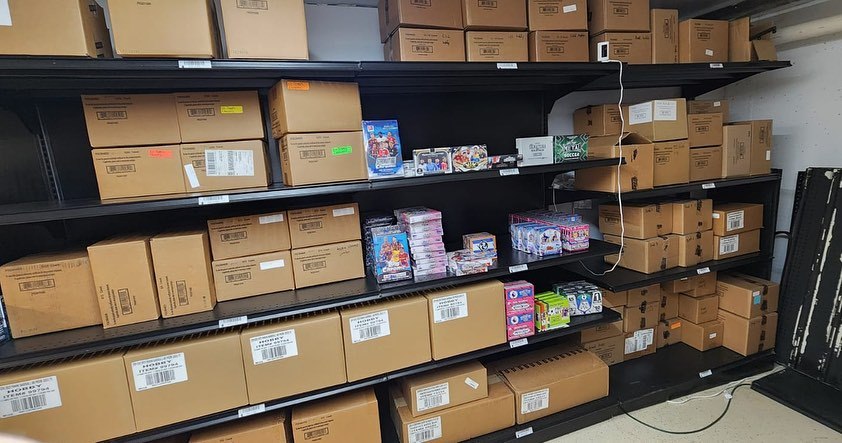
Japan remains one of the most important regions for Pokémon card production and distribution worldwide. Many Japanese Pokémon products move through structured allocation systems connected to local distributors, wholesalers, and export networks.
Areas such as Osaka and the Kansai region play a major role in international product coordination and wholesale movement for trading card products.
Japanese booster boxes are especially popular because of:
- premium print quality
- strong holo patterns
- exclusive card designs
- earlier product releases
- collector demand
- factory-sealed consistency
This strong global demand allows large-scale distributors to continue moving inventory rapidly across multiple countries.
Bulk Purchasing Reduces Costs
Another major reason wholesale pricing can appear lower is volume purchasing.
Many wholesale buyers purchase:
- multiple booster boxes
- sealed cases
- full allocation waves
- mixed product shipments
Larger orders often reduce:
- shipping cost per item
- operational handling costs
- warehouse movement expenses
- packaging overhead
This creates better pricing opportunities compared to single-box retail sales.
In many cases, wholesale suppliers prioritize long-term allocation partnerships instead of maximizing profit on individual products.
Japanese Pokémon Products Continue Dominating the Market
Japanese Pokémon cards continue performing strongly throughout 2026 because collectors increasingly value sealed Japanese products for both collecting and investment purposes.
Products such as:
continue generating strong international demand across multiple regions.

Many resellers now combine Japanese and English Pokémon products together to maintain balanced inventory for their customers.
English Products Also Move Through International Allocation Channels
While Japanese products remain extremely popular, English Pokémon products also continue moving through international distribution systems.
Many wholesale suppliers now support both:
depending on regional market demand and allocation access.
Because products move through different supply chains globally, pricing can vary significantly between public retail stores and wholesale distribution networks.
Why Buyers Often Become Long-Term Partners
Once buyers understand how wholesale distribution works, many eventually transition from small test orders into larger repeat purchases.
Long-term wholesale relationships often provide:
- stronger pricing
- improved allocation access
- priority restocks
- better shipment coordination
- earlier access to upcoming releases
This is why many businesses in the TCG industry focus heavily on repeat partnership structures rather than one-time sales.
Final Thoughts
Japanese Pokémon cards continue dominating the international TCG market because of their quality, strong collector demand, and efficient distribution structure.
While wholesale pricing may initially appear surprisingly low compared to retail market listings, these differences are usually the result of:
- allocation-based purchasing
- bulk distribution
- lower wholesale margins
- large inventory movement
- international sourcing systems
As the Pokémon TCG market continues growing globally, Japanese wholesale products are expected to remain one of the strongest categories for collectors, resellers, livestream sellers, and local card businesses throughout 2026.